

What “spending money” actually means
Your accommodation is one cost. Your course fees are another. Spending money is everything else — the day-to-day cash you need for lunch, transport, your phone, socialising, and the small things that add up faster than you expect.
How much you need depends heavily on your meal plan. A student on half board homestay (breakfast and dinner included) has a very different weekly budget from someone on bed and breakfast or self-catering. We’ll break that out below.
All prices in this guide were checked in early 2026. London prices change, but these figures will give you a realistic starting point.
Lunch: £25–£50 per week
If your accommodation includes breakfast and dinner (half board), lunch is your main daily food expense.
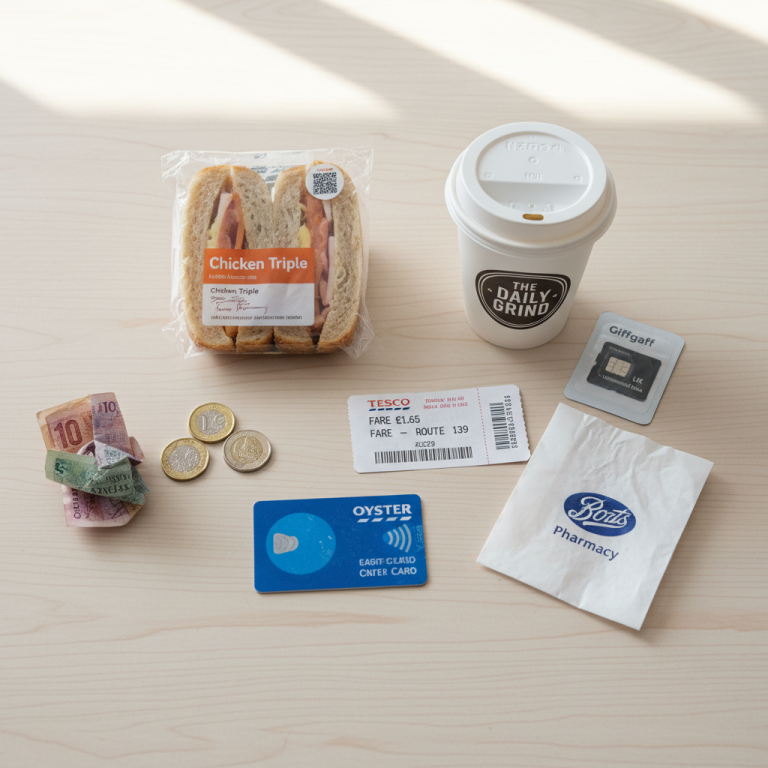
At the budget end: supermarket meal deals (Tesco, Sainsbury’s, Boots) run £3.50–£4.50 for a sandwich, drink and snack. That’s roughly £25/week if you stick to meal deals five days a week.
At the mid range: a lunch from a café, food market or chain restaurant costs £7–£12. Budget £35–£50/week at that pace.
Most students end up somewhere in between meal deals on busy days, something nicer on Fridays. £30–£40/week is a realistic average for lunch on half board.
Transport: £31–£45 per week
London transport costs depend on where you live and whether you qualify for a student discount.
The 18+ Student Oyster card gives a 30% discount on travelcards and bus/tram season tickets. Not all students qualify. You need to be on a course of 14 weeks or more at a participating institution. Check with TfL and your school before assuming you’ll get it.
With the student discount, weekly travelcard prices are:
- Zones 1–2: £31.20/week
- Zones 1–3: £36.70/week
- Zones 1–4: £44.90/week
Without the student discount, adult weekly travelcards are roughly 30% more. Pay-as-you-go (contactless or Oyster) is capped daily (the adult daily cap for Zones 1–3 is £10.50) but weekly costs add up quickly if you’re travelling every day.
Most homestay students are in Zones 2–3, so £31–£37/week is a reasonable transport budget if you qualify for the student card. If you don’t, budget £40–£55/week.
Mobile phone: £5–£6 per week
A UK SIM-only plan with enough data for maps, messaging and occasional video calls costs £5–£6 per week (£20–£25 per month). Providers like giffgaff, Lebara, Voxi and Three all offer rolling monthly plans with no contract. You can buy a SIM at the airport or any phone shop and be set up within an hour of landing.
If your phone is unlocked, this is straightforward. If it’s locked to an overseas carrier, sort that out before you travel — unlocking from abroad is more complicated.
Personal items: £5–£10 per week
Toiletries, laundry products (though homestay usually includes laundry), a haircut every few weeks, over-the-counter medicine if you need it. Not a major category, but it’s not zero. £5–£10/week is realistic.
Social life: £30–£60 per week
This is the most variable category and the one students most often underestimate, or forget to budget for at all.
Coffee with classmates: £3–£5 each time. A pint in a pub: £6–£7 in most of London, more in central areas. Cinema: £12–£16. A casual dinner out with friends: £15–£25 per person. Weekend day trips (Brighton, Oxford, Cambridge): £30–£50 including the train.
A student who goes out twice a week and has coffee with friends most days will spend £40–£60/week on social activities. A more home-based student who cooks with their host family and explores free museums at weekends might spend £15–£25/week. Most land somewhere around £30–£40.
“London Homestays found a great location close to where I was working. Overall, London Homestays handled logistics and communication well. I also had a wonderful host family, and enjoyed my stay.”
— Ben, Singapore
How your meal plan changes the maths
Half board (breakfast + dinner included)
Your main spending money categories are lunch, transport, phone and social life. A realistic weekly total: £100–£170/week depending on lifestyle and transport zone.
This is the simplest budget to manage because your two biggest daily meals are covered. You know what dinner will be. You’re not standing in Tesco at 7pm trying to work out what to cook.
Bed and breakfast (breakfast only)
Add £40–£60/week for evening meals on top of the half board budget. That might be home cooking (cheaper if you’re good at it and have access to a kitchen), takeaway (expensive in London), or eating out (more expensive still). Realistically, B&B students spend £140–£230/week on day-to-day costs.
Self-catering
Add breakfast and dinner costs. Groceries for self-catering in London realistically run £50–£80/week for one person if you’re cooking properly. Less if you live on pasta and rice. More if you eat out regularly. Total spending money for self-catering students: £150–£250/week.
What students forget to budget for
These are the costs that catch people out in the first few weeks:
The first week
Your most expensive week. You haven’t found the cheap lunch spots yet. You buy a coffee every time you pass a café because you’re nervous and don’t know anyone. You might need bedding or towels (not in homestay. Those are provided). You buy an Oyster card or set up contactless. You get a SIM card. Budget an extra £50–£100 for week one.
Airport transfer
£50–£100 each way depending on the airport and your destination. Heathrow to central London by tube is cheaper (£5.60 on Oyster) but involves navigating the Underground with luggage on your first day. Many students book a transfer for arrival and use public transport for departure once they know the system.
Course materials
Some language schools include materials in the course fee. Others charge £30–£50 for textbooks. Check before you arrive.
A winter coat
If you’re arriving from a warmer climate between October and March, you will need a proper coat. London winter isn’t extreme but it’s cold, wet and grey for months at a time. A decent coat from Primark or Uniqlo costs £30–£60. Don’t assume you can get by with what you packed.
Three budget bands
These assume half board homestay (breakfast and dinner included), with lunch, transport, phone and social life as the main spending categories:
Careful budget: £100–£120/week. Meal deals for lunch, Student Oyster, limited social spending, free museums and parks for entertainment. Very doable but requires discipline.
Comfortable budget: £140–£170/week. Mix of meal deals and café lunches, regular social activities, occasional day trips. What most students actually spend.
Generous budget: £180–£220/week. Eating out for lunch most days, regular evenings out, weekend trips, fewer compromises. Comfortable but adds up over a long stay.
Easy ways to save
- Free museums: The British Museum, Tate Modern, National Gallery, Science Museum, V&A and Natural History Museum are all free. So are most London parks. You can fill entire weekends without spending a penny on entrance fees.
- Supermarket meal deals: £3.50–£4.50 for lunch. The quality is surprisingly decent. Tesco and Boots are the most consistent.
- Student Oyster card: 30% off transport if you qualify. Apply before your course starts. It takes a few weeks to arrive.
- Student discounts: UNiDAYS, Student Beans and TOTUM cards give 10–20% off at many shops and restaurants. Register with your student email.
- Cook with your host: If you’re on half board, you already have dinner covered. On B&B, ask your host if you can use the kitchen occasionally — most are happy for you to cook a simple meal.
For a full breakdown of accommodation costs by type, see our guide to what student accommodation actually costs in London in 2026. And for more on what’s included in a homestay, read what is a homestay and meal plans explained.
Ready to start planning? Fill in our enquiry form and we’ll help you work out what fits your budget and preferences.