



Hosting 16–17 year olds
What is different, what is expected, and how to stay confident
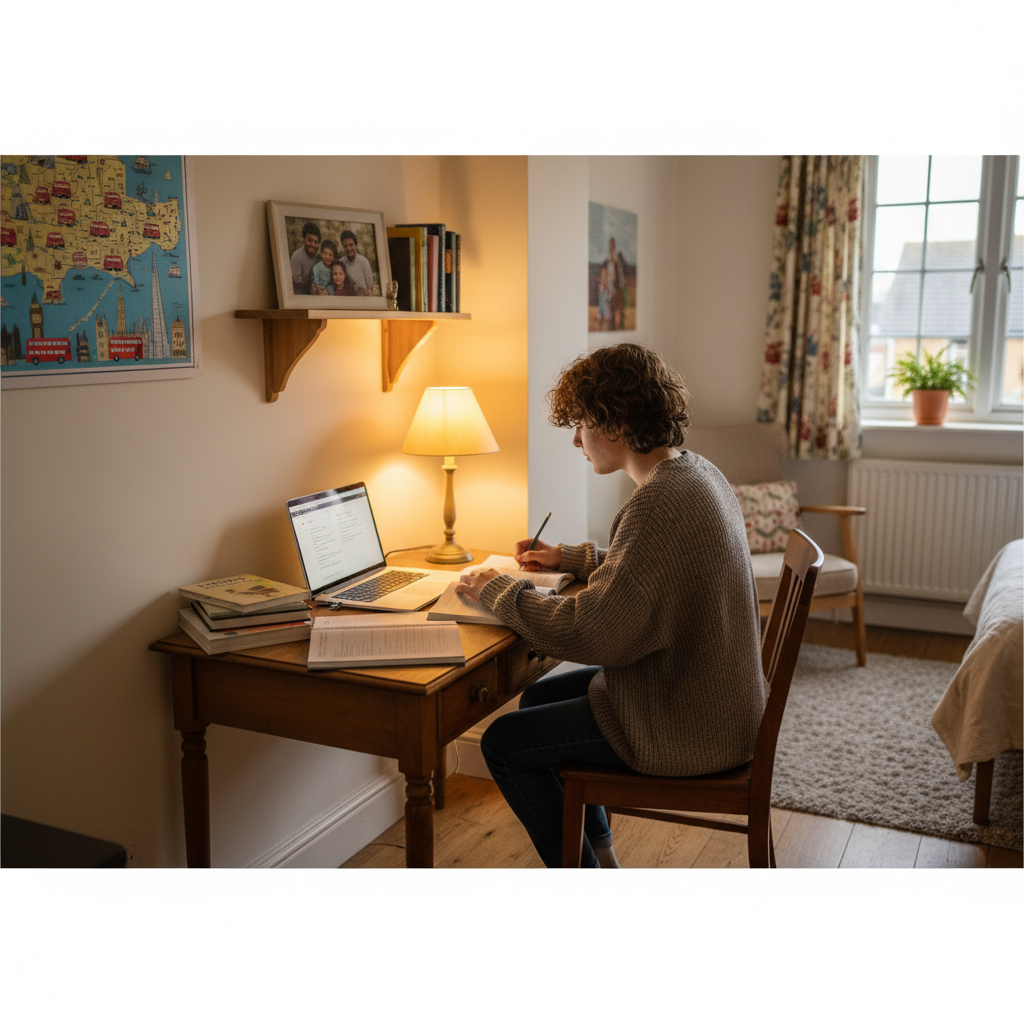
What’s different, what’s expected, and how to stay confident
Last updated: 11 March 2026
Purpose
Many hosts are happy to accommodate adults (18+) but feel uncertain about hosting 16–17 year olds. That’s completely normal.
This page explains:
- what’s different when the guest is 16–17
- what you’re responsible for (and what you’re not)
- when to speak to the student directly, and when to involve London Homestays
- how to decide whether under-18 hosting is right for you
The headline: this is optional
Hosting 16–17 year olds is optional. If you prefer to host adults only, tell us in your application and we will only send adult bookings.
London Homestays arranges individual under-18 placements for students aged 16–17 only. We do not place under-16s individually.
Safeguarding (under-18 placements)
All adults associated with under-18 placements have a duty of care. If anything concerns you, report it promptly, even if it seems minor.
It is not the responsibility of hosts to investigate concerns. London Homestays will receive, record and refer concerns appropriately, and follow advice from the relevant safeguarding services and partners.
For full guidance (including key contacts and reporting routes), please read:
What’s different with 16–17 year olds
Compared to adults, under-18 placements need a bit more structure:
- Curfew arrangements apply and are confirmed for the placement.
- Staying out late / staying away overnight: this isn’t something you should approve informally.
- Boundaries: clear house rules from day one help everyone.
- Welfare: if something feels “off”, raise it promptly.
You’re not expected to “parent” the student. You are expected to provide a safe home environment and to flag concerns early.
Supervision in practice (what this means day-to-day)
Students are not supervised at all times. In practice, we simply expect hosts to:
- have a general sense of when the student is in the home (especially overnight)
- check in if they seem unwell, distressed, or unusually withdrawn
- raise concerns early rather than letting them build up
- follow the agreed curfew/permissions route for that placement
Checks and preparation (under-18 placements)
If you choose to host 16–17 year olds, additional safeguarding steps apply, including:
- DBS checks are required for host households accommodating under-18s.
- Adults normally resident in the home are also subject to criminal record checks for under-18 placements.
- Hosts complete safeguarding awareness training and Prevent training (evidence retained on file).
London Homestays will guide you through what’s required and confirm the steps before any 16–17 placement is arranged.
Curfew and “staying out late”
Students aged 16–17 must follow the curfew arrangements confirmed for their placement. Curfew times are subject to host and parental approval.
As a guide, we suggest students aged 16–17 are home no later than:
- 11.00pm on Fridays and Saturdays, and
- 10.30pm on all other days,
unless the placement’s agreed curfew is different.
If a 16–17 year old asks to stay out late or stay away overnight:
Please do not give permission yourself. Contact London Homestays so we can confirm what is agreed for that placement through the correct route.
Suggested wording:
“I understand. For 16–17 placements we need to follow the agreed permissions route. Please contact London Homestays and they will confirm what’s agreed.”
House rules matter more (keep them reasonable)
Under-18 placements work best when the rules are clear, fair, explained early, and written down (a simple one-page list is enough).
Use the House Rules Template as a starting point and adapt it to your home.
Speak first, escalate second
Most day-to-day issues are best resolved by calm, clear communication between host and student.
If language is a barrier, a translation app can help (for example Google Translate, DeepL, or iTranslate).
A simple 3-step structure:
- Describe the issue (fact, not judgement): “I’ve noticed…”
- Say the impact: “It makes it difficult because…”
- Make a clear request: “Could you please… from today?”
Example:
“I’ve noticed the bathroom is often left wet after use. It makes it hard for others to use it. Could you please wipe down the sink and shower after you use it, from today?”
When to involve London Homestays
Contact London Homestays if:
- there is a welfare/safeguarding concern
- something serious happens
- the issue keeps repeating after you’ve spoken with the student calmly
- you’re unsure what is agreed for that placement (curfew/permissions)
Common situations (what to do)
1) The student wants to stay out late
Don’t agree informally. Ask them to contact London Homestays so we can confirm what is agreed for that placement.
2) The student seems low / unwell / withdrawn
Check in calmly and privately. If you’re concerned, contact London Homestays promptly for guidance.
Suggested wording: “I’ve noticed you seem a bit low. Are you feeling okay? If you’d prefer, we can speak to London Homestays together.”
3) They’re not where they said they’d be (welfare concern)
Treat it as urgent. Contact London Homestays promptly. If you believe there is immediate danger, call 999.
4) House rules are being ignored
Speak clearly and early (one issue at a time). If it continues, contact London Homestays.
5) Visitors / overnight visitors
Guests should ask permission before inviting anyone to your home. Overnight visitors are not permitted unless approved in writing in advance. For 16–17 placements, any requests relating to staying out late or staying away overnight must be referred to London Homestays.
What to report (and what not to)
Please report:
- safeguarding/welfare concerns (even minor ones)
- repeated boundary issues
- anything that feels unsafe or escalating
- patterns that don’t improve after a calm conversation
You don’t need to report:
- small misunderstandings that resolve quickly after you talk
- ordinary teenage quietness or culture shock, unless you have a welfare concern
- minor routine issues that you can solve with clear expectations
FAQs
Do I have to host 16–17 year olds?
No. Hosting 16–17 year olds is optional. Most placements are adults (18+).
Will London Homestays support me if I’m unsure?
Yes. If you have a welfare concern, or you’re unsure what is agreed for a specific placement, contact us and follow the reporting routes in the Safety hub / Child Protection Policy.
What if I agree to under-18 hosting and later change my mind?
Tell London Homestays as soon as possible. We can update your preferences for future requests.
Contacting London Homestays
Office hours: Monday–Friday, 9am–5pm (phone lines 11am–3pm).
Non-urgent over the weekend: email us and we will reply or call you back when the office opens.
Out of hours: emergency support is available for genuine emergencies relating to active placements. Emergency contact details are provided at booking confirmation and via office voicemail (not published online).
Related resources
In their words...

“We have been working with London Homestays since 2011. With their support, we have managed to achieve a high level of customer satisfaction. We strongly recommend London Homestays to anyone who’s looking for quality, reliability and exceptional customer service.”
Alex Fernandes, Accommodation & Visa Compliance Manager, Malvern House London
“Having worked with them since 2013, I can state that London Homestays have always taken care to match our students with suitable host families. They have a very friendly yet professional approach to their work. Our students have enjoyed staying at their homestays. Overall, students say that their host families are attentive and welcoming.”
Carl Roberton, Principal, Stafford House School of English
“We at Burlington School have worked with London Homestays since 2014, and I professionally know the team since 2009 when I worked for another company in the education and accommodation industry. Having had the opportunity to work with London Homestays since the company started operations in London, all of the enquiries have been dealt with in a dedicated and timely manner, the team members are customer-oriented and always provide an exceptional accommodation experience to our students. I have no hesitation to recommend London Homestays as excellent accommodation providers and business partners.”
Eliane Tomasi, Accommodation & Welfare Officer, Burlington School
“Cooperation with London Homestays is always great! We highly appreciate proactive approach and effort to ensure the best possible services for our groups. We always had a great clean accommodation, friendly family and smart local organisers. Students of our groups were satisfied and they enjoyed staying in London very much. We would like to recommend this agency. The whole team is very kind.”
Miroslava Foltýnová, Owner, CK Bus Tours.
“We offer internships in London to European students and looked for a reliable partner to provide accommodation to our candidates. We have been very happy with the services provided by London Homestays, as have our candidates, as they have always received quickly information on families, the possibility to book a room in a short delay and also a good quality of families. I would recommend without any doubt this agency. The team is very professional, efficient and friendly :). We hope to send new trainees soon!”
Stéphanie Frassanito, Program Manager, Work Overseas
“Our school from the Czech Republic has had great experiences with London Homestays. The host families were generally welcoming, kind, and accommodating. The service provided by the coordinator Kate O’Connor and other admin staff is second to none.”
Kate Powers, Vice Principal for English Studies, Sunny Canadian International School
It was an amazing experience, I’ve found a new home where I feel as comfortable as I do in my own home!
Laura, student from France: Homestay booking in Zone 2
“When my children went off to university and got married, my husband and I were empty nesters rattling around. We have an empty bedroom and I quite enjoy keeping it fresh for new students who come to stay with us both short and long term. Invariably, they show us a lot of respect. Coming to London to study or to work as interns is a big adventure for them and I enjoy settling them in and seeing them flourish. Some return or recommend to their friends to come and stay with us. London Homestays are a great organisation to deal with – good at communicating and highly ethical.”
Cathy, Homestay host in Colindale, London
“My first student has just left to return home and I have thoroughly enjoyed hosting her. It has been a lovely experience for me to help her with her English and learn about her Japanese culture.
I was nervous and apprehensive at first but it was so worthwhile and I look forward to continue hosting in the future. It has given me a boost knowing that I can give someone an opportunity that they may not have been able to afford without using London Homestays”
Audrey, Homestay host in Tooting, London
My homestay host Debra transformed my stay into the most amazing experience of my whole life!
Florian, student from Belgium: Homestay booking in Zone 3-
“London Homestays has been an excellent accommodation partner for our students. The team is always helpful, responsive and highly professional. They consistently match students with the right hosts based on individual requirements, ensuring a positive and comfortable homestay experience.”
Ellie Fordham, Student Services Manager, Stafford House 
My homestay host is a lovely lady, she was very helpful and genuine. London Homestays offer an excellent, fast service and quality accommodation. I would definitely recommend to my friends!
Shelaine, student from Canada: Homestay booking in Zone 2
Daphne was a really nice and welcoming host, I really enjoyed my stay with her and her family. Thank you London Homestays for connecting me with her!
Ben, researcher from USA: Superior homestay booking
My stay with my host family makes my time at UK much more fun and exciting! Life is happening!
Bao, student from China: Homestay booking in Zone 4+
“Really, we are very happy with our room at the residence. James in the residences team has helped us with all aspects of our booking and we would like to say, big thank you from the bottom of our hearts!”
Dmitriy and Maria, two students from Russia: Residence booking
“I felt completely at ease and very comfortable with my host! She was really kind…many thanks!”
Doris, student from Italy: Superior homestay in Zone 2
“Shanghai Chelsea International Consulting (SCIC) has worked with Home from Home many times and they have provided a very professional service.”
Chan Sen, Director at Shanghai Chelsea International Consulting
“I highly recommend London Homestays! We have been working with them for a while now, and their professionalism and the quality of their homestays have always been exceptional. One of the homestays we collaborated with was so impressive that we even shared it on our YouTube channel to give our students a glimpse of the warm and welcoming environment they can expect. Thank you, London Homestays, for providing such amazing services. We look forward to continuing our partnership!”
Tuba Akca, Owner at Tubik Academy
The London Homestays portal is amazing. You can manage availability, update photos, and see when you’ve been paid — something I’m always chasing the other agencies. Can’t recommend it highly enough!
Sharon, host in Finchley


