

This guide compares homestay and student residence for language students on short English courses in London — typically two to twelve weeks. Longer academic programmes involve different trade-offs; this is about the shorter stays where first-week logistics matter most.
Why the length of your course changes the decision
Most accommodation comparison guides are written for students spending a full academic year in London. That makes sense — the majority of international students are on degree programmes or year-long foundation courses. But if you’re coming to London for a short English course, the calculation is genuinely different.
On a twelve-month stay, you have time to figure things out. You can spend the first fortnight finding your feet, learning the neighbourhood, stocking the kitchen, working out where to buy groceries. On a four-week course, that settling-in period is a quarter of your entire stay. The real question is not simply which option sounds better. It is which option will make the first week easier, because that first week is a much larger proportion of your time.
What residence is good at
Student residences give you independence from day one. You have your own space (usually a studio or an en-suite room in a shared flat) and nobody else’s schedule to work around. You can eat when you want, come and go freely, and live on your own terms.
For students who have lived independently before, who know London reasonably well, or who are staying for several months, that independence is valuable. Residence works particularly well for people who want total control over their routine and don’t mind the admin of setting up a household from scratch.
Why residence can be harder on a short course
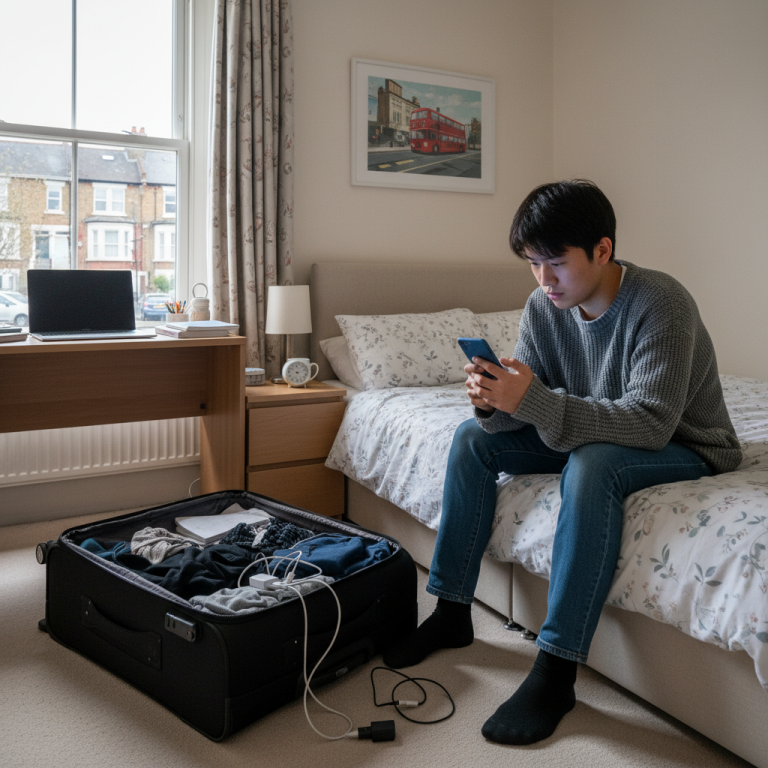
The practical challenge with residence on a short stay is everything you need to organise yourself. Most residences are self-catering. That means on day one (when you’ve just landed, you’re jet-lagged, and you don’t know the area) you need to find a supermarket, buy food, work out the kitchen, and cook. Nobody shows you where anything is.
On a four-week stay, those logistics eat into your time disproportionately. You spend the first few days sorting out basics that a longer-stay student would absorb gradually. By the time you’ve found your rhythm, you’re halfway through your course.
There’s also the social dimension. Residence can feel isolating on a short stay. Longer-term residents have already formed their groups. You arrive, spend a few weeks, and leave before you’ve properly connected with anyone in the building. That isn’t everyone’s experience, but it’s common enough to be worth mentioning.
The money question. Often misunderstood
Short-stay residences in London typically run £275–£400+ per week, depending on zone and room type. At first glance, that can look comparable to homestay rates. But residence is self-catering, so you need to add food costs on top.
A realistic weekly food budget in London (breakfast, dinner, and the odd lunch) runs £70–£100 per week if you’re cooking for yourself. Eating out pushes that higher. Once you add food to the residence rate, the all-in weekly cost is often higher than a homestay on half board, where breakfast and dinner are included every day.
The headline rate comparison is misleading without this context. For a fuller breakdown of what each option actually costs, see our guide to student accommodation costs in London.
What homestay is good at for short courses
Homestay removes the admin. You arrive to a furnished room in a household that’s already running. Dinner is on the table that evening. The Wi-Fi works, the bills are paid, the bed has sheets on it. You don’t need to find a supermarket or work out the heating.
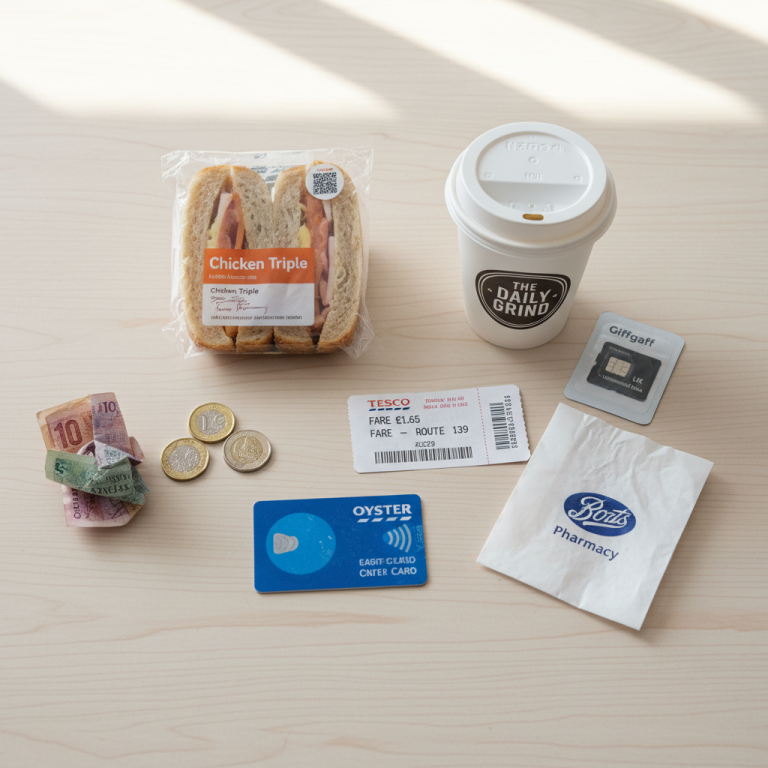
For short-course students, this matters more than it might sound. The transition from airport to settled is measured in hours rather than days. You can start your course the next morning without having spent your first evening searching for a Tesco Metro.
There’s also the English practice. Living with a host means conversation at breakfast and dinner — natural, everyday English that reinforces what you’re learning in class. On a short course, where every hour of exposure counts, that daily practice is genuinely valuable. For more on what a homestay placement includes, see our guide to what a homestay is.
“My experience with Homestays went very well! Thanks to them, I was able to stay in an amazing family for one month in London and they even booked taxis for me in order to get to their house. The staff is always ready to listen and very accommodating, I more than recommend choosing Homestays if you have for project to leave for one month.”
— Florie, France
The first week matters more than you think
On a short English course, the first week sets the tone for everything. If you spend it sorting out logistics (finding shops, buying bedding, figuring out transport) you start your course already behind. If you arrive and everything is in place, you can focus on why you came: learning English, experiencing London, making the most of limited time.
This is where the two options diverge most sharply. Residence gives you independence but requires you to build your routine from zero. Homestay gives you a ready-made base and lets you hit the ground running. Neither is wrong in principle, but the practical difference is larger on a short stay than on a long one.
The food question
Cooking for yourself in London is perfectly doable if you know the city and have time to shop. On a short course, it often becomes a daily chore that eats into your free time. You finish class, you’re tired, and the last thing you want is to plan and cook dinner in an unfamiliar kitchen.
Half board homestay solves this. Breakfast and dinner are provided every day. You only need to sort out lunch, which most students grab near their language school. It’s a small thing, but on a four-week stay it adds up to a significant amount of time and mental energy saved. For more on how meal plans work, see our guide to choosing the right meal plan.
Booking from abroad
Most short-course students are booking from overseas. With residence, you’re often choosing from photos and floor plans without being able to visit. If the room doesn’t match expectations, you’re stuck with it for the duration of a short stay — there’s no time to find an alternative.
With a homestay through a registered provider, you get a vetted placement with a host who has been inspected and reviewed. If something genuinely isn’t working, the provider can arrange a move. That safety net matters more when you’re far from home and don’t know the city. For advice on booking safely from abroad, see our guide to choosing a London homestay.
Which student suits each option?
Residence tends to work better if you:
Have lived independently before. Know London or have visited previously. Want total control over your schedule and meals. Are staying long enough (three months or more) for the settling-in period to feel proportionate. Don’t mind the admin of setting up a household from scratch.
Homestay tends to work better if you:
Are visiting London for the first time. Want to focus on your course rather than household logistics. Value daily English practice outside the classroom. Prefer having meals and bills sorted from day one. Are on a stay of two to twelve weeks where the first week’s experience matters disproportionately.
The short version
For short English courses in London, homestay is the more practical choice for most students. The reason is practical: for a short stay, convenience, support and speed of settling in matter enormously. When your entire stay is four to eight weeks, spending the first few days on logistics is a real cost, not just in money, but in time you can’t get back.
Residence still has its place. For experienced, independent students who know London well, it can work on a short stay too. But for the majority of language students arriving from abroad for the first time, homestay gets you settled faster, costs less once meals are included, and gives you daily English practice that reinforces your course.
Ready to see what a homestay would look like for your course dates? Fill in our enquiry form and we’ll put together options matched to your school and schedule.