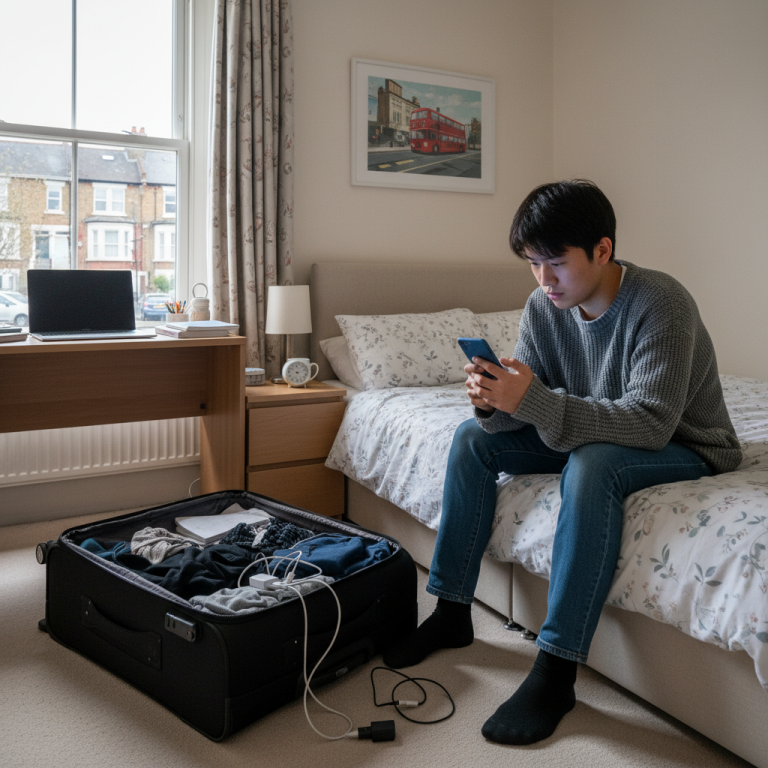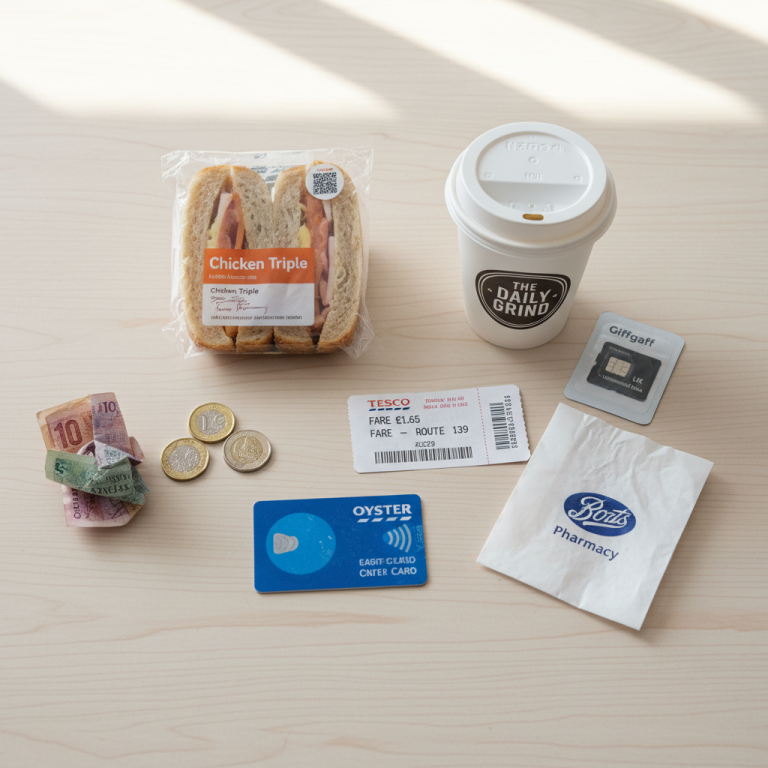


Half board, bed and breakfast, or self-catering. Three options, and the right one depends on how you actually live, not which sounds best on paper.
Most students default to half board because it seems simplest, or to self-catering because it seems cheapest. Neither assumption holds for everyone. This guide explains what each meal plan includes, who it genuinely suits, and where the common mistakes happen.
The three options explained
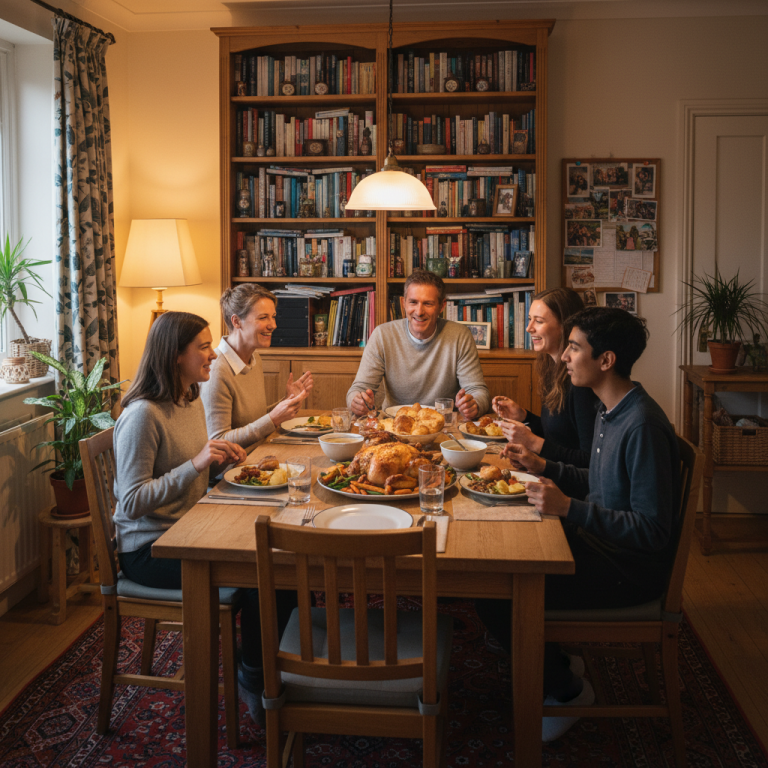
Half board means breakfast and dinner every day, prepared by your host. You eat breakfast before you leave and dinner when you get home. Lunches are your own — most students buy something near their school or pack something from a supermarket.
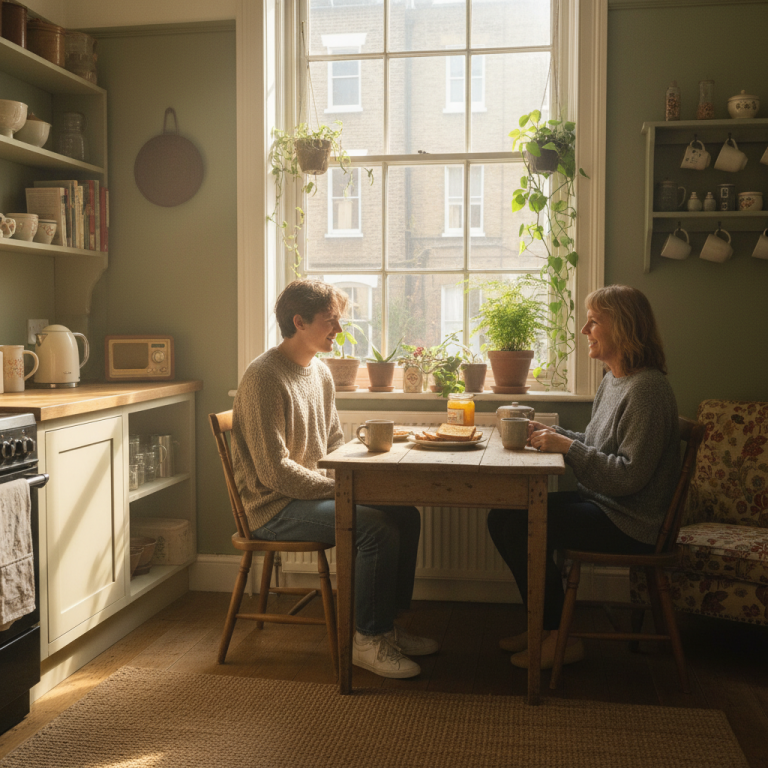
Bed and breakfast means breakfast only. Dinner and lunch are both up to you. You still live in a hosted home with all the usual support, but you are managing your own meals for most of the day.
Self-catering means no meals at all. You have access to the kitchen and buy and cook your own food. This is not the same as renting a flat. You are still a guest in someone’s home, and kitchen use needs to fit around the household’s routine.
Not every host offers every option. If you have a strong preference, mention it when you enquire so the team can match you with a home that fits. For the full detail on what each plan covers, see our meal plans explained page.
The mistakes students make
The most common mistake is choosing self-catering to save money without budgeting properly. The headline weekly rate is lower, but London groceries cost £50–£80 per week for someone cooking regularly. Add the occasional takeaway or meal out, and the all-in cost can match or exceed half board. The saving is not what it looks like.
The second mistake is choosing B&B and then eating out every evening. Restaurant meals and takeaways in London run £10–£20 per meal easily. Over a week, that is £70–£140 on dinners alone, more than the price difference between B&B and half board. Students who pick B&B need a realistic plan for feeding themselves in the evening, whether that is cooking elsewhere, eating at their school, or genuinely budgeting for eating out.
The third is underestimating how much meal planning takes when you are new to a city. Figuring out where to shop, what to cook, and when to eat takes time and energy that many students would rather spend on studying or exploring London. That mental load is real, especially in the first few weeks.
Half board: who it suits
Half board suits most students arriving in London for the first time. It removes two decisions from every day (what to eat for breakfast and what to eat for dinner) and that matters more than it sounds when everything else is new. You are navigating a new city, a new school, a new routine, and possibly a new language. Having meals sorted means one less thing to manage.
It also creates natural conversation with your host. Sitting down for dinner is where most of the real cultural exchange happens. Students who want to improve their English will get more practice at the dinner table than in most classroom hours.
For stays under eight weeks, half board almost always makes the most sense. The convenience matters more on short stays, and the cost difference is small once you add up what you would spend feeding yourself.
“They are a cheerful and warm couple who were very helpful, giving me travel recommendations and helping me out when I was in trouble. I have continued to visit them since leaving the homestay. They are a wonderful family who love to cook and prepare delicious meals every day.”
— Miyo, Japan
Bed and breakfast: who it suits
B&B works for students who know they will be out most evenings. Perhaps your school finishes late and you eat near campus. Perhaps you have friends in London and plan to socialise most nights. Perhaps you are on a work placement with irregular hours and cannot commit to a regular dinner time.
If any of those apply, B&B makes sense. You get the structure of a hosted home, breakfast every morning, and the freedom to handle evenings your own way. But if none of them apply, and you are choosing B&B simply because it is cheaper than half board, think carefully about what dinner will actually cost you over four, eight or twelve weeks.
Self-catering: who it suits
Self-catering suits students who genuinely enjoy cooking and want full control over what they eat. It also suits longer stays (three months or more) where the student has time to build a routine, find a good local supermarket, and settle into a pattern.
It does not suit students who are arriving in London for the first time and have never managed their own meals before. The combination of a new city, a new kitchen, unfamiliar shops and unfamiliar ingredients is more work than most people expect. Students who choose self-catering for their first few weeks often spend more on food than they would have on half board, because they default to ready meals and takeaways while they get their bearings.
Kitchen use on self-catering is not unlimited. You are a guest in someone’s home, and cooking needs to fit around the household. Hosts will typically agree times that work for both of you. This is rarely a problem once the routine is established, but it is worth understanding before you arrive.
Short stays change the answer
For stays of four weeks or less, half board is almost always the right choice. The convenience outweighs everything else. You do not have time to learn a new kitchen, find a supermarket you like, and build a cooking routine before your stay is over. On a short stay, every hour spent on logistics is an hour not spent on the reason you came to London.
For stays of one to three months, half board still works well, but B&B becomes a reasonable option if your schedule genuinely keeps you out most evenings. Self-catering only starts to make practical sense at around the three-month mark, when you have had time to settle in properly.
The budget comparison
The numbers shift depending on category and zone, but here is the general shape. A Standard Zone 3+ half board placement costs from £235 per week. The same placement on self-catering costs from £185 per week — a saving of £50. But add £50–£80 per week in groceries, and the all-in cost is £235–£265. The “saving” disappears or reverses.
B&B falls in between: from £205 per week on Standard, plus £40–£60 per week for dinners, giving an all-in cost of £245–£265.
Half board is not always the cheapest option, but it is usually the most predictable. You know what your week costs before it starts. For full pricing across all categories and meal plans, see our accommodation prices page. For a broader look at what student accommodation costs in London, see our 2026 cost guide.
Quick decision questions
Are you arriving in London for the first time? Half board.
Is your stay under eight weeks? Half board.
Will you genuinely be out most evenings? B&B.
Do you enjoy cooking and are you staying three months or more? Self-catering might work, but budget honestly first.
Still unsure? The best meal plan is the one that makes your week easiest, not the one that sounds cheapest or most independent on paper. Fill in our enquiry form and mention what you are thinking. The team can advise based on your specific dates, school and routine.
Frequently asked questions
What meal plans do London homestays offer?
Three options — half board (breakfast and dinner), bed and breakfast (breakfast only), and self-catering (no meals, kitchen access). Not every host offers every option.
Which homestay meal plan is best for short stays?
Half board usually works best for stays under eight weeks. Convenience matters more on short stays, and having meals sorted reduces daily spending and decision-making.
Can I use the kitchen on half board?
Kitchen use is not included as standard on half board. Light use may occasionally be agreed with your host in advance, but you should not assume kitchen access.
Is self-catering cheaper than half board?
The headline rate is lower, but once you add London food costs (£50–£80/week for groceries), the all-in weekly cost can be similar or higher than half board.