

Where LSE actually is, and why that matters for accommodation
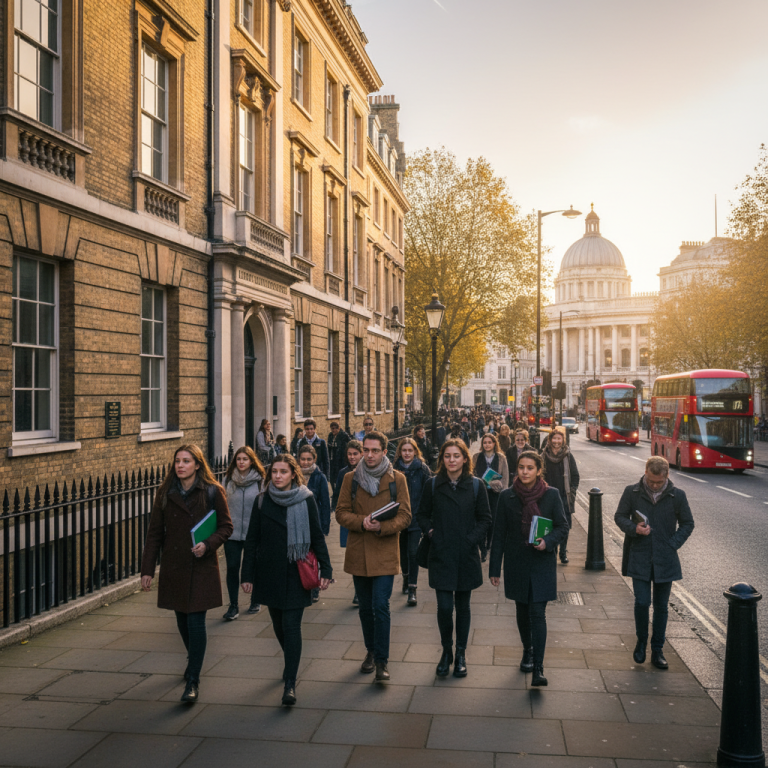
LSE’s main campus is in the streets between Holborn and Aldwych, a few minutes’ walk from Temple and Covent Garden. It’s central London (Zone 1) surrounded by law firms, theatres and expensive everything.
Students arriving from abroad often assume they need to live nearby. They search for rooms in WC2 or SE1, see the prices, and either overpay or panic. But the campus is served by three tube stations (Holborn, Temple, Charing Cross), two mainline rail connections, and several bus routes. You don’t need to live in Zone 1 to get there easily. You just need to be on the right line.
Why “central” is the wrong priority
Zone 1 rooms near LSE (Bloomsbury, Southwark, Waterloo) typically cost £280–£400+ per week. That’s before food and bills. For most students, especially those on language courses or exchange programmes, that price makes no practical sense.
The issue isn’t just cost. Zone 1 accommodation near campus tends to be small, old, and oversubscribed. You’re paying a premium for a postcode, not for a better room or a better experience. And if you’re in a homestay, the area you live in shapes your daily life far more than the area your campus is in. You sleep there, eat there, and spend your evenings there. Commuting 25–35 minutes each way is normal in London — it’s not a compromise, it’s just how the city works.
What works in practice: areas with direct routes to LSE
The Northern line runs through Holborn (via the Bank branch) and connects to a string of well-served south London neighbourhoods. These are the areas LSE students consistently find the best balance between commute time, cost, and quality of life.
Balham
Northern line to Holborn in around 25 minutes. Also has a mainline station with services into Waterloo and Blackfriars. Good high street with cafes, restaurants and a weekend farmers’ market. Residential, safe, well-connected. Popular with young professionals, which means the area has energy without being overwhelming.
Tooting
One stop further south from Balham on the Northern line. Cheaper, more diverse, and increasingly popular. The commute adds 3–4 minutes. Tooting Broadway and Tooting Bec both have their own character — South Asian restaurants, independent shops, Tooting Bec Lido in summer. Zone 3 pricing.
Wimbledon
District line into Temple (direct, no change) or mainline trains into Waterloo in around 17 minutes. More suburban in feel. Good for students who want quiet evenings and green space. It’s further from the centre in distance but often faster in practice because the rail links are strong.
Brixton
Victoria line to Green Park, then one stop on the Piccadilly line to Holborn — or just walk from Green Park in 15 minutes. Total commute around 25–30 minutes. Brixton has a strong identity: markets, live music, diverse food scene. It’s Zone 2 on the boundary, so pricing sits between central and outer boroughs.
Streatham
Mainline rail into Blackfriars (15–20 minutes) then a short walk to LSE. Also bus routes running north into central London. Streatham is Zone 3/4 pricing with a long high road full of everyday shops and restaurants. Quieter than Brixton, more affordable than Balham. A sensible option that doesn’t appear on many lists.
Typical patterns we see
Most LSE students we place end up south of the river, somewhere on the Northern line corridor or the South Western Railway routes. A few prefer east London (the Central line into Holborn is direct) but south London dominates because the routes are simpler, the areas are more residential, and the pricing works.
Students who arrive insisting on Zone 1 often change their mind within the first term. Once you’ve lived in London for a few weeks, you realise that nobody judges where you live by zone number. What matters is how easy it is to get home at the end of the day and whether you actually like the neighbourhood.
Route quality matters more than zone number
A Zone 2 area that requires two changes and a bus is worse than a Zone 3 area with one direct tube. This is the mistake most first-time London students make: they look at a zone map and assume lower numbers are better.
For LSE specifically, any area with direct Northern line access (Bank branch) or direct rail into Waterloo/Blackfriars will give you a commute under 35 minutes. Areas that look close on a map but sit on different tube lines (parts of Hammersmith, Shepherd’s Bush, Kilburn) can take 45 minutes or more with changes.
If you’re comparing options, use TfL’s journey planner with your LSE campus postcode (WC2A 2AE) and check the route at 8:30am on a weekday. That tells you more than any zone map.
Why homestay works well for LSE students
LSE has a large proportion of international students, many on one-year masters programmes or shorter exchange placements. That profile (new to London, limited time, studying intensively) is exactly where homestay makes the most practical sense.
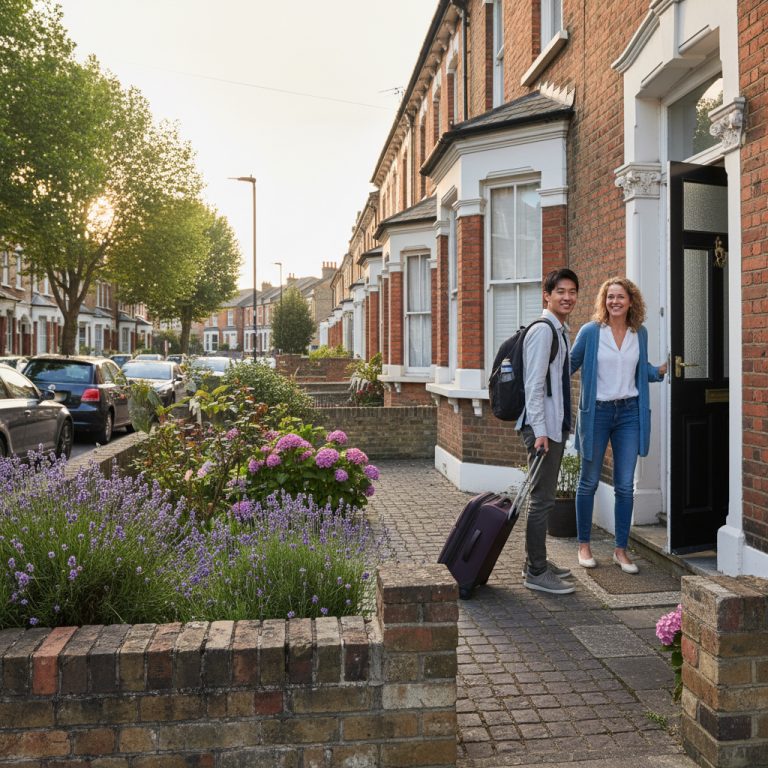
You arrive to a furnished room in a home that’s already set up. Meals are provided if you choose half board. You don’t spend your first week buying bedding in Primark and working out how the gas meter works. You can focus on the reason you came to London in the first place.
For a breakdown of what’s included and how it compares to other options, see our guide to what student accommodation actually costs in London in 2026.
“It is always difficult to come to another country and start afresh. But if you have friends around you, everything becomes easier. And London Homestays helped me to find these friends. She is such a warm and kind person who made me feel like at home at her own home. It’s been a fantastic year!”
— Aleksandra, Poland
For more on choosing areas, see our full London location guides. And if you’re still early in the process, our guide to choosing a London homestay covers what to look for and what questions to ask.
Short version
LSE is in central London but you don’t need to live in central London to get there easily. The best-value areas for LSE students are along the Northern line south of the river (Balham, Tooting, Brixton) and the rail routes into Waterloo and Blackfriars. A direct 25–35 minute commute from a residential neighbourhood will almost always beat a £350/week room five minutes from campus.
If you’re interested in exploring what’s available, start with our guide to what a homestay actually involves, or go straight to our enquiry form and tell us your course dates and preferences.