









1. House rules being ignored
Speak to the guest first (calmly, privately). If it continues, contact London Homestays with dates/times and what you said.




A simple escalation guide for hosts
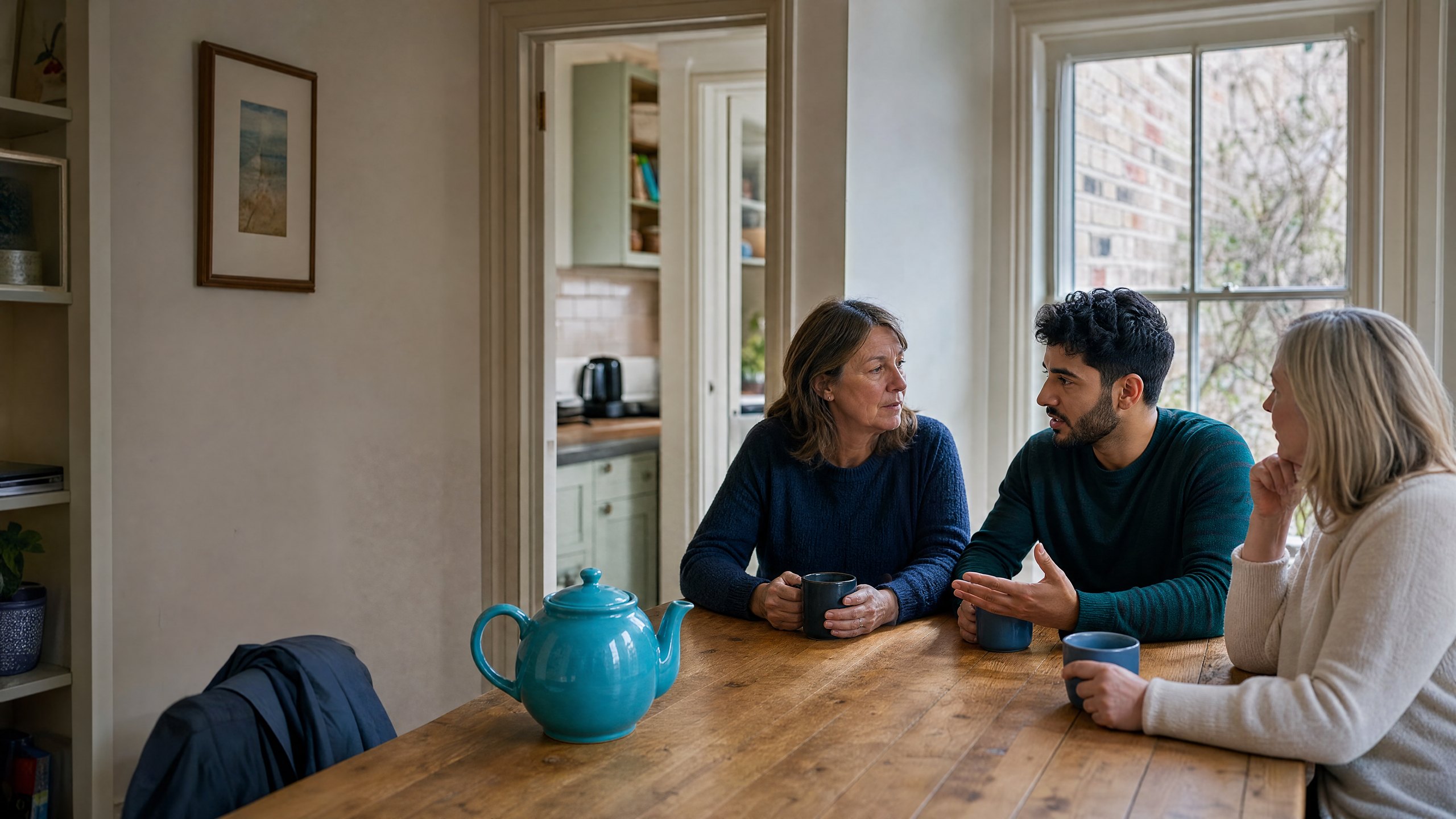
Most stays are straightforward. When there’s an issue, the key is to act early, keep things calm, and use the right channel.
This guide explains:
This is guidance, not a contract document.
For most day-to-day issues, the best outcome comes from a calm conversation between host and guest.
In practice:
Why we do it this way: stepping in too early can put people on the defensive, and sometimes makes things worse. A direct, respectful conversation usually resolves things faster.
1) Is anyone in immediate danger?
2) Can this be resolved with a calm conversation today?
A) Emergency (act now)
Examples:
What to do:
B) Urgent but not an emergency (same day if possible)
Examples:
What to do:
C) Non-urgent (next working day)
Examples:
What to do:
You don’t need a long discussion. A short, calm message works best.
A simple 3-step structure:
Example:
“I’ve noticed the bathroom is often left wet after use. It makes it hard for others to use it. Could you please wipe down the sink and shower after you use it, from today?”
If language is a barrier: write your message and run it through a translation app (for example Google Translate or DeepL), then show both versions.
Two short lines you can use if you’re unsure what to say:
Avoid:
Please contact London Homestays when:
When you contact us, please include:
If you have it, add:
London Homestays will usually do one or more of the following:
A move is a last resort. In most cases, issues can be resolved with clear communication and a reset of expectations. If a placement can’t be resolved or can’t continue safely, we will coordinate the next steps and arrange a move where appropriate.
Important: please don’t assume a move is the default solution. We will try to resolve the issue first before considering a move.
Speak to the guest first (calmly, privately). If it continues, contact London Homestays with dates/times and what you said.
Speak to the guest first and keep it factual (“Please keep the bathroom tidy after use”). If it continues, contact London Homestays.
Speak to the guest first and agree quiet hours. If it continues, contact London Homestays.
Ask them to contact London Homestays. Don’t agree extensions directly.
Tell them to contact London Homestays first. Don’t agree on the spot.
Contact London Homestays promptly for guidance. Don’t make informal agreements about staying out late, overnight stays elsewhere, or “special permissions”.
Not always. We’ll look at what’s happening, speak to the relevant people, and work out what needs to happen next. We’ll usually try to resolve things first before considering a move.
Minor misunderstandings are normal. Most issues are best resolved by calm, clear communication between host and guest. Repeated rule breaches, welfare concerns, or escalating conflict should be raised early.
If there is immediate danger, call 999. Otherwise contact London Homestays promptly and follow the safeguarding guidance for the placement.
Office hours: Monday–Friday, 9am–5pm (phone lines 11am–3pm).
Non-urgent over the weekend: email us and we will reply or call you back when the office opens.
Out of hours: emergency support is available for genuine emergencies relating to active placements. Emergency numbers are provided at booking confirmation and via office voicemail (not published online).
Last updated: 11 March 2026
Apply to become a host family and we'll guide you through the next steps.
Apply now
“We have been working with London Homestays since 2011. With their support, we have managed to achieve a high level of customer satisfaction. We strongly recommend London Homestays to anyone who’s looking for quality, reliability and exceptional customer service.”
Alex Fernandes, Accommodation & Visa Compliance Manager, Malvern House London
“Having worked with them since 2013, I can state that London Homestays have always taken care to match our students with suitable host families. They have a very friendly yet professional approach to their work. Our students have enjoyed staying at their homestays. Overall, students say that their host families are attentive and welcoming.”
Carl Roberton, Principal, Stafford House School of English
“We at Burlington School have worked with London Homestays since 2014, and I professionally know the team since 2009 when I worked for another company in the education and accommodation industry. Having had the opportunity to work with London Homestays since the company started operations in London, all of the enquiries have been dealt with in a dedicated and timely manner, the team members are customer-oriented and always provide an exceptional accommodation experience to our students. I have no hesitation to recommend London Homestays as excellent accommodation providers and business partners.”
Eliane Tomasi, Accommodation & Welfare Officer, Burlington School
“We have placed students with London Homestays for over ten years. The host families suit what our students actually need, and when something comes up during the stay, it gets sorted quickly rather than passed between people. They make everything very easy, with detailed host profiles showing transport links to our school, and a thorough matching process. Our office always knows where a student is and who to call. Happy to recommend.”
Ewa Pietreniuk, Head of Partnerships, Speak Up London
“We partnered with London Homestays to help us verify and assess homestay hosts we were recruiting for our international students in Glasgow. Their expertise in vetting hosts to British Council standards gave us real confidence in the quality and safety of the accommodation we were able to offer. The team were professional, responsive and a pleasure to work with throughout. We would highly recommend London Homestays to other colleges and universities looking for a knowledgeable and reliable accommodation partner.”
Lucia Murray-Rapuano, Global Skills Development Manager, City of Glasgow College
“Cooperation with London Homestays is always great! We highly appreciate proactive approach and effort to ensure the best possible services for our groups. We always had a great clean accommodation, friendly family and smart local organisers. Students of our groups were satisfied and they enjoyed staying in London very much. We would like to recommend this agency. The whole team is very kind.”
Miroslava Foltýnová, Owner, CK Bus Tours.
“We offer internships in London to European students and looked for a reliable partner to provide accommodation to our candidates. We have been very happy with the services provided by London Homestays, as have our candidates, as they have always received quickly information on families, the possibility to book a room in a short delay and also a good quality of families. I would recommend without any doubt this agency. The team is very professional, efficient and friendly :). We hope to send new trainees soon!”
Stéphanie Frassanito, Program Manager, Work Overseas
“Our school from the Czech Republic has had great experiences with London Homestays. The host families were generally welcoming, kind, and accommodating. The service provided by the coordinator Kate O’Connor and other admin staff is second to none.”
Kate Powers, Vice Principal for English Studies, Sunny Canadian International School
It was an amazing experience, I’ve found a new home where I feel as comfortable as I do in my own home!
Laura, student from France: Homestay booking in Zone 2
“When my children went off to university and got married, my husband and I were empty nesters rattling around. We have an empty bedroom and I quite enjoy keeping it fresh for new students who come to stay with us both short and long term. Invariably, they show us a lot of respect. Coming to London to study or to work as interns is a big adventure for them and I enjoy settling them in and seeing them flourish. Some return or recommend to their friends to come and stay with us. London Homestays are a great organisation to deal with – good at communicating and highly ethical.”
Cathy, Homestay host in Colindale, London
“My first student has just left to return home and I have thoroughly enjoyed hosting her. It has been a lovely experience for me to help her with her English and learn about her Japanese culture.
I was nervous and apprehensive at first but it was so worthwhile and I look forward to continue hosting in the future. It has given me a boost knowing that I can give someone an opportunity that they may not have been able to afford without using London Homestays”
Audrey, Homestay host in Tooting, London
My homestay host Debra transformed my stay into the most amazing experience of my whole life!
Florian, student from Belgium: Homestay booking in Zone 3 “London Homestays has been an excellent accommodation partner for our students. The team is always helpful, responsive and highly professional. They consistently match students with the right hosts based on individual requirements, ensuring a positive and comfortable homestay experience.”
Ellie Fordham, Student Services Manager, Stafford House
My homestay host is a lovely lady, she was very helpful and genuine. London Homestays offer an excellent, fast service and quality accommodation. I would definitely recommend to my friends!
Shelaine, student from Canada: Homestay booking in Zone 2
Daphne was a really nice and welcoming host, I really enjoyed my stay with her and her family. Thank you London Homestays for connecting me with her!
Ben, researcher from USA: Superior homestay booking
My stay with my host family makes my time at UK much more fun and exciting! Life is happening!
Bao, student from China: Homestay booking in Zone 4+
“Really, we are very happy with our room at the residence. James in the residences team has helped us with all aspects of our booking and we would like to say, big thank you from the bottom of our hearts!”
Dmitriy and Maria, two students from Russia: Residence booking
“I felt completely at ease and very comfortable with my host! She was really kind…many thanks!”
Doris, student from Italy: Superior homestay in Zone 2
“Shanghai Chelsea International Consulting (SCIC) has worked with Home from Home many times and they have provided a very professional service.”
Chan Sen, Director at Shanghai Chelsea International Consulting
“I highly recommend London Homestays! We have been working with them for a while now, and their professionalism and the quality of their homestays have always been exceptional. One of the homestays we collaborated with was so impressive that we even shared it on our YouTube channel to give our students a glimpse of the warm and welcoming environment they can expect. Thank you, London Homestays, for providing such amazing services. We look forward to continuing our partnership!”
Tuba Akca, Owner at Tubik Academy
The London Homestays portal is amazing. You can manage availability, update photos, and see when you’ve been paid — something I’m always chasing the other agencies. Can’t recommend it highly enough!
Sharon, host in Finchley“I have been a host for London Homestays for over 8 years. The team is professional, friendly and always quick to respond. They do a great job matching students with hosts and making the whole process smooth and straightforward. The students I’ve hosted have been respectful and lovely to have in my home. I would happily recommend London Homestays to anyone considering becoming a host.”
Sarah-Jayne, Walthamstow — host since 2018
“London Homestays are very pleasant and put you at ease.”
Pat & Clyde, hosts in Tooting, London“The team — especially James and Ellie — were incredibly responsive, patient and kind. They answered all my questions and checked with hosts about everything from commute times to where I’d store my bicycle. They even sent a Chinese translation of their first email. I felt truly welcomed.”
Ruoxi, student from China